
This month dot-art speaks to artist Lou Campbell Ryan.
Lou Campbell Ryan (they/them) originally born on the Wirral, they have since lived in various places such as London, Manchester, and Ireland. Although they are currently housebound due to various health conditions, Lou finds light and joy in life and uses this to create artwork that hopefully speaks to others.
Lou’s childhood was spent within a fundamentalist religious cult. The trauma experienced has impacted their outlook on life profoundly. Lou is very aware of the brevity of life and the necessity of grabbing life firmly to get as much out of living as possible. One of Lou’s favourite sayings is “Ars longa; vita brevis”. Originally penned in Greek by Hippocrates, it roughly translates to “life is short yet it takes a long time to perfect one’s craft”.
Lou has had an unusual path for their art. Many times over the years their health and/or family situation has limited their ability to explore their craft. Now finally established back in Liverpool and with time to pursue art, Lou has once again picked up the paint and canvas in order to create.
Can you describe your style?
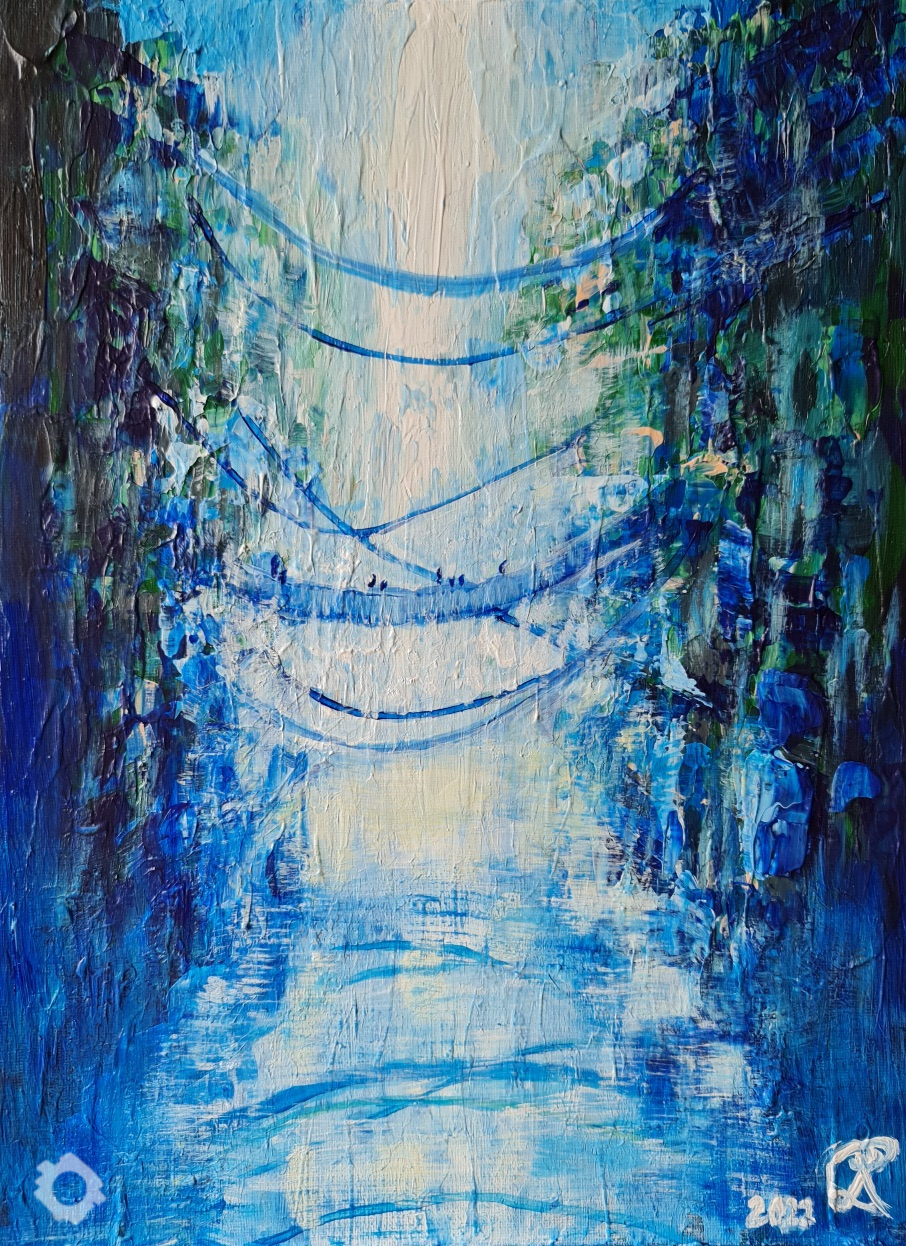
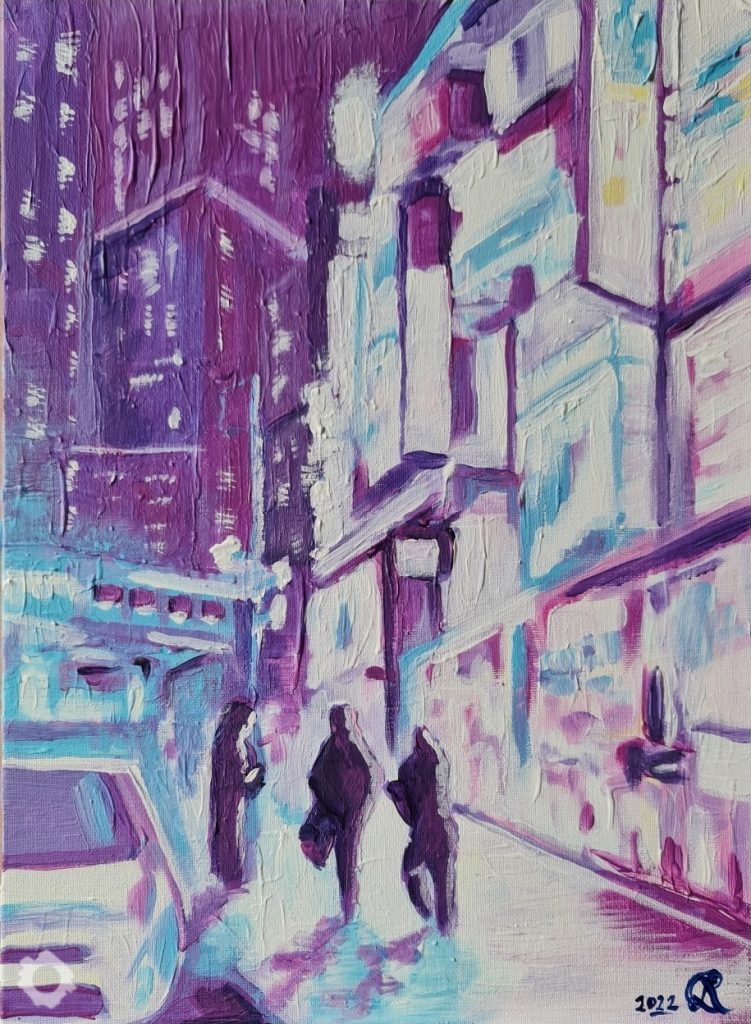
I always find this a tricky question. I suppose strictly speaking it’s a mix of post-impressionism and expressionism. But for me it’s a lot more simple. It’s just about how I experience light and colour. I somehow want people to experience what I see directly.
Which medium do you work with and what do you like about it specifically?
Primarily acrylic on canvas, board, or paper. I love acrylic as it allows me to build layers and texture relatively quickly. Plus my cat, Humphrey, has asthma so it allows me to work solvent-free.
Can you talk us through your process? Do you begin with a sketch, or do you just go straight in? How long do you spend on one piece? How do you know when it is finished?
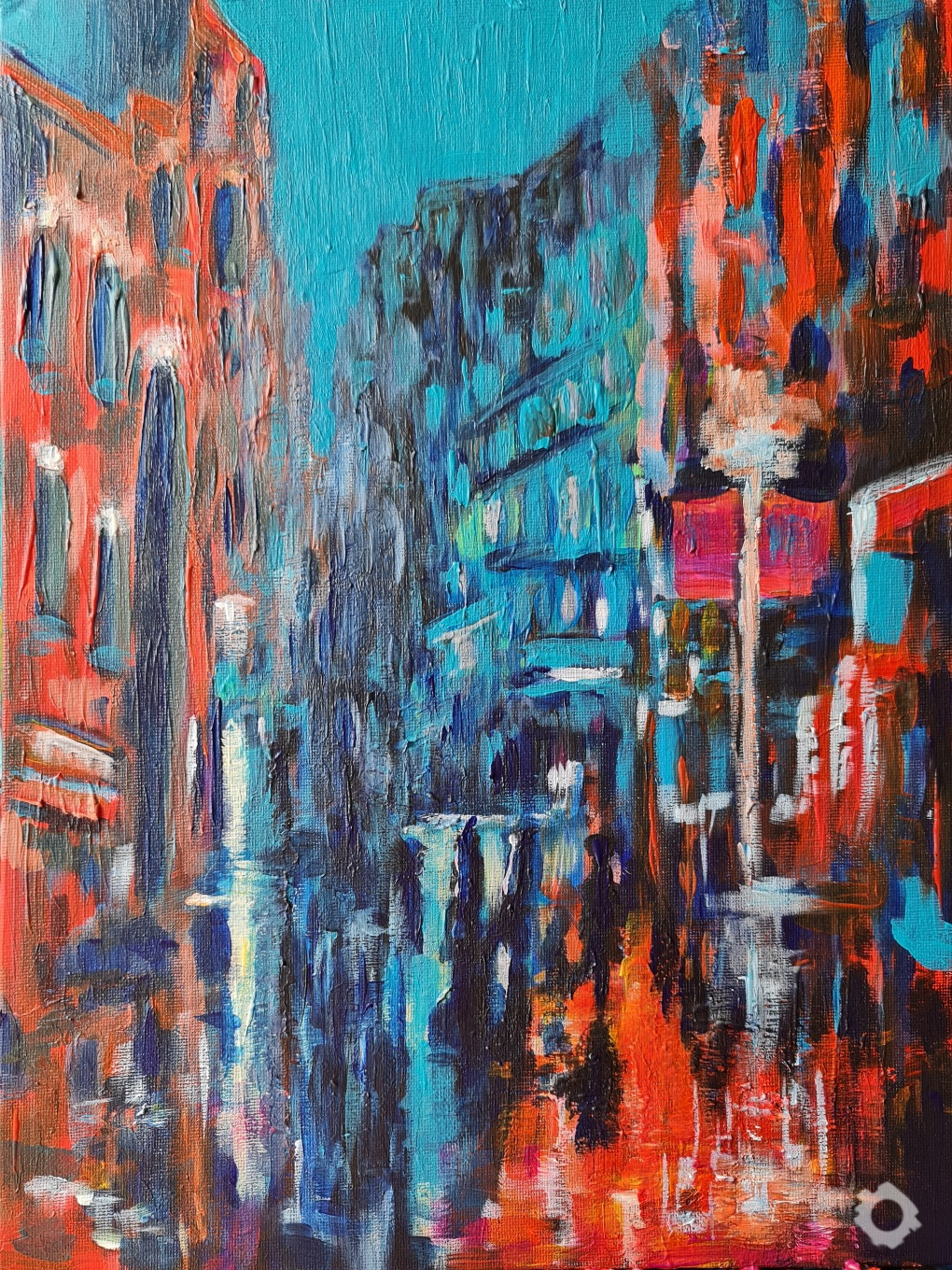
The vast majority of my paintings are researched. I have an idea of what I want to portray so then I research many reference images that show the type of urban landscape I’m reaching for. Then I look for different colour palettes that will represent how I see things. Most of the time I prefer working with a limited palette.
I very rarely use black, it’s not needed. I experiment with different colours until I’m happy with a result and then I start work. Most of the time a painting will take anywhere between 3-5 days. Sometimes I have to take a break and come back to a painting maybe weeks later, working on other things in the meantime. Then I will come back with fresh eyes. How do I know when something is finished? I just know. It looks right. The image seems harmonious.
When did you begin your career in art?
I’ve always considered myself an artist, but I suppose more so when I sold my first piece in 2008.
Who or what inspires your art?
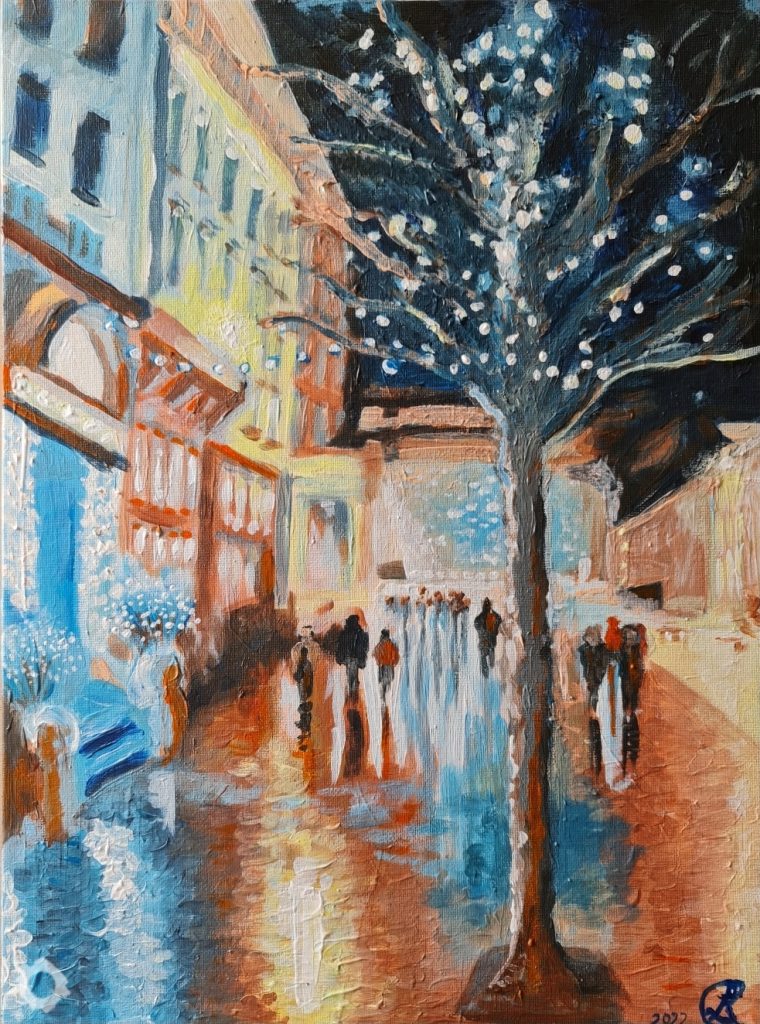
I went back to college in my 30’s to improve my art. The tutor there, an established artist, Lizzie, was wonderful. She opened my eyes to so many truly talented artists and helped me become freer and less constrained by my preconceptions.
I used to love Van Gogh especially, but she introduced me to other artists that I continue to draw inspiration from. Gerhart Richter, Anselm Kiefer, Frank Auerbach, Jean Fouquet, Georgia O’Keeffe, Tamara de Lempicka, Louise Bourgeois, Nan Goldin, Diane Arbus.
Why is art and creativity important to you?
It allows me to not only to appreciate the beauty of light and colour around me but makes it possible to share my vision. I think if you’re passionate enough about something you can’t keep it to yourself. In addition – as someone who is transgender, queer, and disabled – it enables my voice to maybe be heard when it would otherwise have been talked over.
What does it mean to be an artist in the Liverpool City Region?
The whole Merseyside region for me is incredibly important. I am the genealogist in my family, and our lives and history are imbedded in the working class history of Liverpool and surrounds. From a family member who was a carter in the 1870s who died after his cart ran over his leg, to two young brothers who lived in the workhouse because their mother had died and there was no-one to look after them. The urban landscape of cities such as Liverpool are full of the ghosts, imprints, and whispered stories of the past, are begging to be seen and listened to.
What are you working on at the moment?
I’m working on a series of paintings specifically of the Liverpool landscape throughout the 19th and 20th centuries.
What was the best advice given to you as an artist?
Don’t get too bogged down in the detail. Free yourself to feel the broad strokes. I think this can apply to life too.
Discover more of Lou Campbell Ryan’s work on our online shop!